
Tuesday, November 07, 2006
A Party Political Broadcast
If you buy a PS3 over a Wii, you're a Republican. That's all I have to say on this issue.

Buried Ships
Venice Biennale: the Austrian Pavilion
At the Venice Biennale, the exhibit on cities displayed a model of half-buried aircraft carrier, apparently after a collage of Hollein's called Aircraft Carrier City, which evoked for me the cover art from Iain Banks' Use of Weapons. In a typical fantastical stroke, pointing to his real position as a fantasy author not a hard science fiction author, the villain of the story is general of one army, whilst his childhood rival is the commander of the other. His navy and army mostly defeated, the villain sails his mammoth battleship up a river until it grounds and fortifies the land around it, turning it into a massive, half-buried fortress that reduces to dust any army that comes close.
Of course, turning boats into houses is common practice (One of our family friends lives on a immovable houseboat in Hampton Court, which would topple like a stack of cards were it allowed to drift) and, once they're fixed in place, partial or even total burial is just a matter of time. The final stage of burial, after this change of use, is the Viking
burial - not the mythic burial at sea, but the deliberate internment of
the chief's corpse, chattels and goods in an artificial hillock. In San Francisco, notably, developers have often dug up the remains of ships whilst tunneling for foundations; apparently the boats were used to bring immigrants to the area and then either abandoned, used as housing or broken up for parts. As the bay filled with sand from the hills, the ships, or at least their remains, were gradually buried and are being uncovered peripatically, though mostly destroyed when uncovered (Americans still not quite having got hold of the concepts of antiquarianism it seems).




At the Venice Biennale, the exhibit on cities displayed a model of half-buried aircraft carrier, apparently after a collage of Hollein's called Aircraft Carrier City, which evoked for me the cover art from Iain Banks' Use of Weapons. In a typical fantastical stroke, pointing to his real position as a fantasy author not a hard science fiction author, the villain of the story is general of one army, whilst his childhood rival is the commander of the other. His navy and army mostly defeated, the villain sails his mammoth battleship up a river until it grounds and fortifies the land around it, turning it into a massive, half-buried fortress that reduces to dust any army that comes close.
Of course, turning boats into houses is common practice (One of our family friends lives on a immovable houseboat in Hampton Court, which would topple like a stack of cards were it allowed to drift) and, once they're fixed in place, partial or even total burial is just a matter of time. The final stage of burial, after this change of use, is the Viking
burial - not the mythic burial at sea, but the deliberate internment of
the chief's corpse, chattels and goods in an artificial hillock. In San Francisco, notably, developers have often dug up the remains of ships whilst tunneling for foundations; apparently the boats were used to bring immigrants to the area and then either abandoned, used as housing or broken up for parts. As the bay filled with sand from the hills, the ships, or at least their remains, were gradually buried and are being uncovered peripatically, though mostly destroyed when uncovered (Americans still not quite having got hold of the concepts of antiquarianism it seems).
powered by performancing firefox
Monday, November 06, 2006
Example Note 1
Papercuts of Peter Callesen
From Proceedings of the Athanasius Kircher Society.
A man who makes beautiful papercuts (and not those schoolyard ones, Log, naughty boy, no!) so that they leave a shadow and form that cohere beautifully. I've never seen anything quite like it, in that the complexity it must involve would strain any mentality so. Worth a look. (Images stolen straight from Athanasius, sorry!)


From Proceedings of the Athanasius Kircher Society.
A man who makes beautiful papercuts (and not those schoolyard ones, Log, naughty boy, no!) so that they leave a shadow and form that cohere beautifully. I've never seen anything quite like it, in that the complexity it must involve would strain any mentality so. Worth a look. (Images stolen straight from Athanasius, sorry!)
powered by performancing firefox
Tuesday, October 31, 2006
SAFE TOPIC #1: Triple Salt Licorice
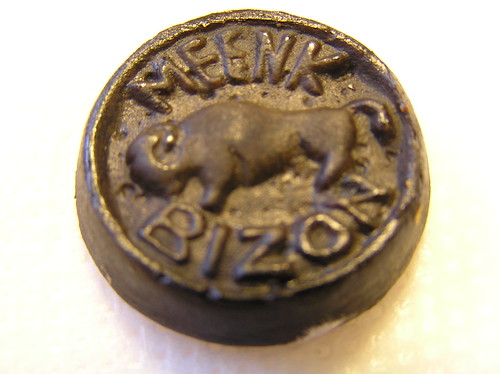
Hello! Apparently, I have lots of readers on here I didn’t know about including my beloved workmates (hi again guys!) so I'm being very safe and nice and clean and all BBC on here. God bless and keep her majesty, long may she burn, erm, rule!
SAFE TOPIC #1: Triple Salt Licorice
This stuff is teh horror. It looks like innocuous liquorice, normal in its safe foulness. We all know what it's going to taste like. But slip a sliver into your maw and you'll be initially pleasantly surprised. It's like a salt lick with, at the rear, the slightest hint of flavour. Your tongue tingles and you feel like any second it'll get used to the salt, go a little numb, and then you'll be able to taste the liquorice better. Yet it never does, and you keep striving to capture that flavour, raging against the dying of the light.
Then the gag reaction kicks in.
I've fed this to my workmates and I've not seen anybody manage to restrain it in their mouth for more than a minute. Even hardened salt-liquorice lovers end up more puckered than a civil servant's arsehole, while newbies shriek and choke before spewing it out into the nearest bin, where it sits, gently hissing as it burns through paper-shreds. Of course, the pain doesn't end there. The sting of salt has so overloaded your synapses that it doesn't wash away, but leaves you smacking your lips together, swilling your mouth with hot water and trying to drown it with other foods and drinks. Nothing quite removes it and, like all truly disgusting foodstuffs, you feel the need to try it again, just to see it as bad as you remember. After a while, you feel, you must get used to it. It's true that the first few seconds become a purgatorial bliss, like picking scabs or reading religious ranting, but the nausea always kicks in again.
This is available from specialist sweet shops round Britain and Scandinavia. Buy the minimum possible, but buy some. You must try it, you really must.
So You Want To Increase The Amount Of Needless Spam I Get From Illiterate Numpties?
So You Want To Increase The Amount Of Needless Spam I Get From Illiterate Numpties?
Write several self-serving screeds on How to be a Games Journalist!
My advice: grammar, spelling and wit are all I ask for. If you show the barest sign of literacy I'll be really surprised. However, due to the high quality of people we have working internally at Future (Hi there, all you delightful lads n lasses!) I don't have any freelance to give out, so you'd be wasting your time mailing me. Sorry!
NB: Only Log's and Affectionate Diary's are actually worth reading. Funny people, tee-hee.
Write several self-serving screeds on How to be a Games Journalist!
My advice: grammar, spelling and wit are all I ask for. If you show the barest sign of literacy I'll be really surprised. However, due to the high quality of people we have working internally at Future (Hi there, all you delightful lads n lasses!) I don't have any freelance to give out, so you'd be wasting your time mailing me. Sorry!
NB: Only Log's and Affectionate Diary's are actually worth reading. Funny people, tee-hee.
Monday, October 16, 2006
All Apologies
I'd like to say sorry to anyone I've offended with my posts on here. I've been disrespectful and rude to my team members and unduly denigrated their talents. I've deleted the more offensive posts and I apologise wholeheartedly about any content that remains. I've made the mistake of treating a private blog as a private diary or board to discuss things with my friends, and it's something I won't do again. Sorry!
Tuesday, October 03, 2006
Respect & Imprecision II
Pentadact commented:
(Changed it, ta! Criticism always welcome.)
I don't really mind what intellectual depth a magazine writes to, though my prose will always tend to the purple. I just care that the words are being used to mean the ideas that they are commonly known to mean, so that the literature and science of today will keep meaning the same thing to suceeding generations. Yes, language changes with time; but there's no reason to let it and reasons to stop it (consistency of idea communication). I agree, however, that the worst offenders against language are those who deliberately confuse the meanings of their sentences through needless obscurantism (there I go), which is why I have a particular distaste for academia. There's a breed of academia, including philosophy and english literature, that maintains itself by spewing nonsense words out for every situation.
I'll quote Wikpedia on Logorrhoea then get back to the point.
In his anecdote collection Surely You're Joking, Mr. Feynman!, the physicist and raconteur Richard Feynman describes a time when he participated in a multi-disciplinary conference discussing the nebulous topic "the ethics of equality". Feynman was at first apprehensive, having read none of the books the conference organizers had recommended. A sociologist brought a paper he had written beforehand to the committee where Feynman served, asking everyone to read it. Feynman found it completely incomprehensible and feared that he was out of his depth—until he decided to pick one sentence at random and parse it until he understood. The sentence he chose (to the best of his recollection) was
The individual member of the social community often receives his information via visual, symbolic channels.
Feynman "translated" the sentence and discovered it meant "People read". The rest of the paper soon made sense in the same fashion.
Further examples are easy to create:
Doctors say that the best way to lose weight is to eat less.
The medical community indicates that downsizing average total daily intake is maximally efficacious in the field of proactive weight-reduction methodologies.'
He is the sort of person who will call a spade a spade.
This man is a member of the personality class exhibiting the tendency to term a pedally operated humus redistribution device a pedally operated humus redistribution device.
It's not other people I have trouble with, though I will admit that I'd rather be the lazy bottom of a class of intellectuals, than lazy and mediocre amongst similar mediocrities (all this is theoretical, note); it's the lack of respect for myself the job engenders that really causes problems. I find I can't appreciate what I do, when what attracts praise or at criticism is so random. There seems no standard that carries from magazine to magazine (or indeed in websites) and the feedback from our readers is so limited, negative and mostly illiterate. The other writers on my magazine have stopped reading our forum, out of fear I think.
So the readers don't respect us and the management don't respect us. Despite the approbation of our peers (or at least those, like yourself, who are respectable), it's hard to maintain self-respect in the face of that.
Anyway, I hope I've inspired you on a few press trips. ;-)
Would this be a bad time to note that "lets" in the context of "allows" doesn't have an apostrophe?
I've recently got to reading two magazines more closely, one very mainstream and in-your-face, the other more niche and intellectual. I'm finding the mainstream one wins dramatically in the precision stakes. Almost everything on the page is expertly judged to /specify/, not just intimate, what the game is and how it works, while the niche rag drowns in rambling blocks of longer but /less/ precise words. Simple, common language only becomes inadequate when the writer lapses into repeating a vocabulary of clichés, not because they're tired but because they're being used out of habit rather than their specific purpose. More elaborate and abstract writing has its own vocabulary of clichés too, though: they're less tired because fewer publications write in this style, but they're no less imprecise.
I don't think you have to like and respect other people who do your job to take pride in it yourself. In fact, I find the terrible attitude of a lot of journos on press trips actually spurs me to be more professional, attentive and respectful, and take my work there more seriously.
(Changed it, ta! Criticism always welcome.)
I don't really mind what intellectual depth a magazine writes to, though my prose will always tend to the purple. I just care that the words are being used to mean the ideas that they are commonly known to mean, so that the literature and science of today will keep meaning the same thing to suceeding generations. Yes, language changes with time; but there's no reason to let it and reasons to stop it (consistency of idea communication). I agree, however, that the worst offenders against language are those who deliberately confuse the meanings of their sentences through needless obscurantism (there I go), which is why I have a particular distaste for academia. There's a breed of academia, including philosophy and english literature, that maintains itself by spewing nonsense words out for every situation.
I'll quote Wikpedia on Logorrhoea then get back to the point.
In his anecdote collection Surely You're Joking, Mr. Feynman!, the physicist and raconteur Richard Feynman describes a time when he participated in a multi-disciplinary conference discussing the nebulous topic "the ethics of equality". Feynman was at first apprehensive, having read none of the books the conference organizers had recommended. A sociologist brought a paper he had written beforehand to the committee where Feynman served, asking everyone to read it. Feynman found it completely incomprehensible and feared that he was out of his depth—until he decided to pick one sentence at random and parse it until he understood. The sentence he chose (to the best of his recollection) was
The individual member of the social community often receives his information via visual, symbolic channels.
Feynman "translated" the sentence and discovered it meant "People read". The rest of the paper soon made sense in the same fashion.
Further examples are easy to create:
Doctors say that the best way to lose weight is to eat less.
The medical community indicates that downsizing average total daily intake is maximally efficacious in the field of proactive weight-reduction methodologies.'
He is the sort of person who will call a spade a spade.
This man is a member of the personality class exhibiting the tendency to term a pedally operated humus redistribution device a pedally operated humus redistribution device.
It's not other people I have trouble with, though I will admit that I'd rather be the lazy bottom of a class of intellectuals, than lazy and mediocre amongst similar mediocrities (all this is theoretical, note); it's the lack of respect for myself the job engenders that really causes problems. I find I can't appreciate what I do, when what attracts praise or at criticism is so random. There seems no standard that carries from magazine to magazine (or indeed in websites) and the feedback from our readers is so limited, negative and mostly illiterate. The other writers on my magazine have stopped reading our forum, out of fear I think.
So the readers don't respect us and the management don't respect us. Despite the approbation of our peers (or at least those, like yourself, who are respectable), it's hard to maintain self-respect in the face of that.
Anyway, I hope I've inspired you on a few press trips. ;-)
Respect & Imprecision
Alta L. Price on quibbles.
Normally, I let things slide. I don't mind minor errors, I don't try to argue with the fanatics and I look upon friend's idiocies as endearing foibles. When I do argue, it doesn't bother me, it's just a laugh. Yet in the last few weeks, my prissiness has got the better of me and I've started correcting people, complaining when I felt complaints needed to be made. Price is right (no pun intended) that our society no longer prizes accuracy. There's almost a link between the lack of deference for linguistic standards and our society's emphasis that everything is acceptable, a link even to *gasp* multiculturalism. Sounds like I'm being a bad liberal here, going against freedom doesn't it? The claim is there is no standard, no norm but each individual has the right to do anything they want to; it lets people be sloppy, let's them claim that they're 'not wrong but just different.' In terms of language, I'm afraid there is right and wrong and it's a necessary moral system. Language is the essential tool for communicating ideas. If I mean something by a word and you mean something different by the same word, we find ourselves with an obstacle to communication.
Regarding his comments on "approaching professions with imprecision" I normally don't love my profession; the standards for entry are far too low and set too low by our employers and it has fundamentally discouraged me over the years, making me not work as hard at my job as I could have and not respect myself or others for doing it. Eurogamer, notably, is one site that sets its standards relatively high and I have more respect for the people it employs. Edge magazine, despite my concerns over its increasingly populist focus, also has a care for correct, clear and useful language. However, Future's magazines, particularly on the console side, seem to care little for talented writing and more for speed of copy production. If a job is advertised (which it often isn't) we tend to employ the best of the limited selection of passable candidates who apply, rather than looking actively for an ideal candidate. I look at the sub-editors I admire, the ones who can turn lacklustre and poorly written copy into sparkling reams of perfectly fitted prose (their names reveal them to be uniformly women: Katharine Davies, Liz Raderecht, Vanessa Hards and Clare Lydon), and I find their numbers in decline and the respect for them sadly lacking. Those who are good are often discouraged by the mediocrity around them; our art staff, for example, are all immensely qualified and talented but it's very rare that I see any of them doing original design or varying from templates. Notably our company pays its marketing and advertising personnel very well and promotes them to its top positions, seeing them as the key to larger profits. However, their profit is grounded in the editorial staff and if they're no good or dissatisfied, and hence imprecise, then the magazine is no good.
Edit: So let's trace that thought more clearly. I don't like imprecisions in language because (wide reason) clear communication is necessary for the maintenance of society (assertion to be justified elsewhere) and because (narrow reason) words are my life. Imprecisions in language are on the rise because laxity is in general on the rise. Laxity is on the rise because our society made a choice in the 1960s to be more permissive and that choice accorded with the needs of the economy; that people's history, knowledge and skills don't matter so long as they can do the job that is available. Ah, balls, I've lost the thread again.
See, it’s a slippery slope. It could be argued that these aren’t matters of right and wrong, and are instead a question of imprecision. But they’re imprecisions I can’t deal with because, as I see it, these people approach their professions with imprecision, which implies that they neither respect nor love what they’re doing enough to care about getting it right.
Normally, I let things slide. I don't mind minor errors, I don't try to argue with the fanatics and I look upon friend's idiocies as endearing foibles. When I do argue, it doesn't bother me, it's just a laugh. Yet in the last few weeks, my prissiness has got the better of me and I've started correcting people, complaining when I felt complaints needed to be made. Price is right (no pun intended) that our society no longer prizes accuracy. There's almost a link between the lack of deference for linguistic standards and our society's emphasis that everything is acceptable, a link even to *gasp* multiculturalism. Sounds like I'm being a bad liberal here, going against freedom doesn't it? The claim is there is no standard, no norm but each individual has the right to do anything they want to; it lets people be sloppy, let's them claim that they're 'not wrong but just different.' In terms of language, I'm afraid there is right and wrong and it's a necessary moral system. Language is the essential tool for communicating ideas. If I mean something by a word and you mean something different by the same word, we find ourselves with an obstacle to communication.
Regarding his comments on "approaching professions with imprecision" I normally don't love my profession; the standards for entry are far too low and set too low by our employers and it has fundamentally discouraged me over the years, making me not work as hard at my job as I could have and not respect myself or others for doing it. Eurogamer, notably, is one site that sets its standards relatively high and I have more respect for the people it employs. Edge magazine, despite my concerns over its increasingly populist focus, also has a care for correct, clear and useful language. However, Future's magazines, particularly on the console side, seem to care little for talented writing and more for speed of copy production. If a job is advertised (which it often isn't) we tend to employ the best of the limited selection of passable candidates who apply, rather than looking actively for an ideal candidate. I look at the sub-editors I admire, the ones who can turn lacklustre and poorly written copy into sparkling reams of perfectly fitted prose (their names reveal them to be uniformly women: Katharine Davies, Liz Raderecht, Vanessa Hards and Clare Lydon), and I find their numbers in decline and the respect for them sadly lacking. Those who are good are often discouraged by the mediocrity around them; our art staff, for example, are all immensely qualified and talented but it's very rare that I see any of them doing original design or varying from templates. Notably our company pays its marketing and advertising personnel very well and promotes them to its top positions, seeing them as the key to larger profits. However, their profit is grounded in the editorial staff and if they're no good or dissatisfied, and hence imprecise, then the magazine is no good.
Edit: So let's trace that thought more clearly. I don't like imprecisions in language because (wide reason) clear communication is necessary for the maintenance of society (assertion to be justified elsewhere) and because (narrow reason) words are my life. Imprecisions in language are on the rise because laxity is in general on the rise. Laxity is on the rise because our society made a choice in the 1960s to be more permissive and that choice accorded with the needs of the economy; that people's history, knowledge and skills don't matter so long as they can do the job that is available. Ah, balls, I've lost the thread again.
Wednesday, September 27, 2006
Sami Al Haj
I am so upset right now. I have just been listening to Letters from Guantanamo on Radio 4 and it has left me really, really distraught. It is a set of letters from Sami El Haj, a camera operator with Al Jazeera captured crossing the border between Pakistan and Afghanistan in 1999. He had dual passports and visas; he had done this many times before in his coverage of the war. The border authorities accused him of filming Bin Laden then imprisoned him in Kandahar, before selling him to the Americans. Yes, selling him. As Musharraf admitted this week, the Pakistani government was a) threatened into joining the war and b) paid well to pass along captives. Notably, the Americans have admitted to paying bounties for Al Quaeda fighters but claimed to be surprised that the Pakistani government was involved. What terrifies me is that the Sudanese-born Sami is lucid, clever and an amazingly literate writer, whose letters are rich, stuffed with emotion and strength in the face of alleged horrors (the ones that make it through the censors). “The enormous statue cries out freedom and justice to all. But gradually the lights around Lady Liberty grow weaker and we see that she is either deceiving or deceived.” It is not clear whether Sami is an enemy combatant, a fanatical warrior who wants to see the west die. However, it seems unlikely and if this man, if any of these men are criminals, then let us try them and be done with it. If the allegations do not stand up in a court of law, then let them go free. Sure, follow them if you want, if you still suspect them. Nevertheless, for these individuals this horror should not continue, it is illegal, against the Geneva conventions, against the moral law that trickles even inside me. I am horrified and angry, convinced by the honest beauty of this man’s words. More Sami, as far as I can remember from the programme, “The light in the statue’s hand flickers and may go out. One day men may stand around this wreck and say one day ‘here stood a great thing, liberty.” God, if you exist, damn Guantanamo bay and those who uphold it.
Tuesday, September 26, 2006
The Daily Dahlia
Following James Elroy's wondeful study of a gruesome murder in 50s L.A., The Black Dahlia, crime hackette Lynda La Plante has written a money-spinning rip-off called The Red Dahlia, set fifty years after the first murder, timed to coincide with the release of the Scarlett Johansen movie and plagiarising large portions of its illustrious predecessor (I've not read the book, I'm just assuming this). However, La Plante has missed out a key part of Elroy's fiction, which is slight references to a recognisable and real popular character involved on the peripheries of the plot, and also a touch of corrupted authority. Which is why I present to you this day this exclusive excerpt from my forthcoming novellete / vpdodcast / mystery play "Joseph And The Amazing Technicolour Dahlia";
Joseph enters the room. His shaggy knuckles are pulling together his shabby multicoloured coat of dreams and he's obviously drunk; stumbling, mumbling, filthy. He could even be a journalist.
Joseph: "A crash of drums, ugh, dum-de-dum, a flash of li-ur-hic, I need a shite, yarr, balls."
Joseph collapses in a corner, his brothers sell his sleeping body to slave traders, he travels to Egypt where he narrowly avoids being blown up by Arab extremists / Israeli pre-emptive surprise airstrikes / errant Western Cruise Missiles and becomes advisor to the democratically elected Pharoah Godking III The Shit, before being reconciled to his randy father and brothers in a touching scene (Warning: no touching). Whilst Joseph is dozing one day, his wife sells his magic hair to a passing salesperson/genie/disguised grand vizier, removing the gift of hard-drinking that has allowed him to charm/booze his way to success in the court of The Shit. After disgracing himself at a state banquet, he is expelled and narrowly avoids becoming a lion's dinner in the arena by showing off his excellent manicure skills, before wandering out onto the streets, drunken, where he is accosted in exactly the same manner as before by a passing flowerseller. She reaches out to the erstwhile bigwig's drunken figure, holding in her hand a bushy tuberous perennial which she hopes to exchange for goods or indeed services.
Passing Flower Salesperson "Excuse me sir, would you like a flower?"
Joseph proceeds to vomit copiously over the poor flowerseller's bloom, turning it a variety of shades depending on which course of his fantastic banquet he is regurgitating. It is hence technicolour and also amazing so our story can
End.
I expect this to sell millions.

Joseph enters the room. His shaggy knuckles are pulling together his shabby multicoloured coat of dreams and he's obviously drunk; stumbling, mumbling, filthy. He could even be a journalist.
Joseph: "A crash of drums, ugh, dum-de-dum, a flash of li-ur-hic, I need a shite, yarr, balls."
Joseph collapses in a corner, his brothers sell his sleeping body to slave traders, he travels to Egypt where he narrowly avoids being blown up by Arab extremists / Israeli pre-emptive surprise airstrikes / errant Western Cruise Missiles and becomes advisor to the democratically elected Pharoah Godking III The Shit, before being reconciled to his randy father and brothers in a touching scene (Warning: no touching). Whilst Joseph is dozing one day, his wife sells his magic hair to a passing salesperson/genie/disguised grand vizier, removing the gift of hard-drinking that has allowed him to charm/booze his way to success in the court of The Shit. After disgracing himself at a state banquet, he is expelled and narrowly avoids becoming a lion's dinner in the arena by showing off his excellent manicure skills, before wandering out onto the streets, drunken, where he is accosted in exactly the same manner as before by a passing flowerseller. She reaches out to the erstwhile bigwig's drunken figure, holding in her hand a bushy tuberous perennial which she hopes to exchange for goods or indeed services.
Passing Flower Salesperson "Excuse me sir, would you like a flower?"
Joseph proceeds to vomit copiously over the poor flowerseller's bloom, turning it a variety of shades depending on which course of his fantastic banquet he is regurgitating. It is hence technicolour and also amazing so our story can
End.
I expect this to sell millions.
Subscribe to:
Posts (Atom)